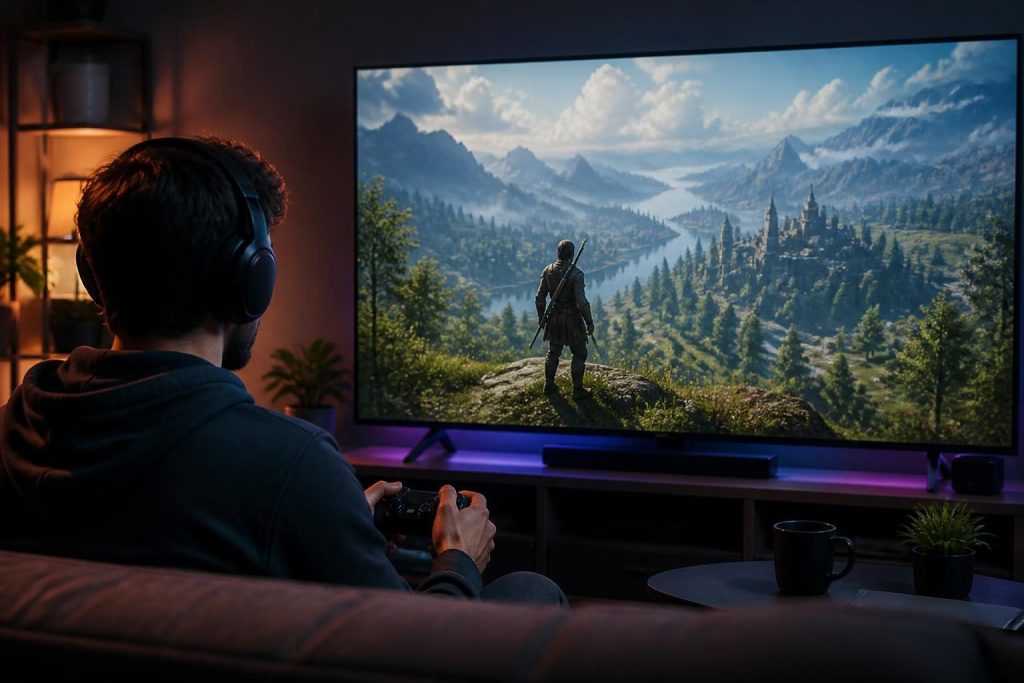
Open-world game design has emerged as a dynamic and engaging approach to video gaming, captivating players by offering expansive environments and unprecedented levels of freedom. As game developers continue to innovate within this genre, they are discovering that the unique qualities of open-world experiences significantly enhance player engagement. This trend is not just about creating vast landscapes; it involves crafting rich narratives, interactive mechanics, and immersive worlds that draw players in and keep them coming back for more.
Creating Immersive Environments
One of the hallmarks of open-world game design is the creation of expansive, immersive environments that players can explore at their own pace. Games like The Legend of Zelda: Breath of the Wild and Red Dead Redemption 2 exemplify this trend by offering detailed landscapes filled with diverse ecosystems, weather systems, and day-night cycles. Such features lend a sense of realism and depth to the game world, increasing player immersion.
Furthermore, the interplay between environment and gameplay mechanics is crucial. Developers are increasingly using environmental storytelling to convey narrative elements through the world itself. For example, players can uncover hidden lore by exploring ruins, artifacts, or even graffiti scattered throughout the landscape. This method not only enriches the player’s experience but also fosters a deeper connection to the game’s story.
Narrative Flexibility and Player Choice
Another significant aspect of open-world game design is the emphasis on player choice and narrative flexibility. Unlike linear games, open-world titles allow players to dictate the order in which they approach quests and challenges. This freedom can be seen in games like The Witcher 3: Wild Hunt, where players can engage with side quests, main story arcs, and character interactions in a non-linear fashion. As a result, players feel a greater sense of agency, leading to increased emotional investment in their choices.
Furthermore, developers are incorporating branching narratives that respond to player decisions, creating multiple endings and outcomes. This approach not only extends the replayability of the game but also makes players feel that their actions significantly impact the game world. The complexity introduced by these narrative choices encourages players to engage with the game on a deeper level, enhancing their overall experience.
Technological Innovations in Open-World Design
The integration of advanced technologies is reshaping open-world game design, enabling developers to create more dynamic and responsive worlds. Artificial intelligence (AI) plays a pivotal role in populating these environments with lifelike characters and behaviors. For instance, NPCs in games like Cyberpunk 2077 exhibit complex interactions, reacting to player actions and environmental changes in real-time. This level of interactivity enhances immersion and makes the game world feel alive.
Moreover, the use of procedural generation techniques allows developers to create vast, diverse landscapes without exhausting resources. Games like No Man’s Sky utilize algorithms to generate unique planets and ecosystems, offering players an endless variety of environments to explore. Such innovations not only expand the possibilities of open-world design but also keep players engaged with new experiences each time they log in.
The Role of Community and Multiplayer Experiences
As open-world games evolve, the integration of community aspects and multiplayer experiences is becoming increasingly prevalent. Titles like GTA Online and Fortnite blend the open-world format with interactive online communities, allowing players to collaborate or compete in real-time. This shift encourages social interaction, creating a sense of belonging and investment among players.
Incorporating player-generated content further enriches the open-world experience. Games that allow users to create and share their own missions, quests, or even entire stories tap into the creativity of their player base, fostering community engagement. The resulting content not only enhances replayability but also builds a vibrant culture around the game, keeping players invested long after initial release.
Future Trends in Open-World Game Design
Looking ahead, the future of open-world game design seems poised for even greater innovation. Virtual reality (VR) and augmented reality (AR) technologies hold the promise of transforming the way players experience open-world environments. By immersing players in fully interactive worlds that can be explored from a first-person perspective, these technologies may redefine engagement in unprecedented ways.
Moreover, the ongoing advancements in cloud gaming could allow for seamless transitions between single-player and multiplayer experiences, creating a truly interconnected world. As technology continues to progress, the boundaries of open-world game design will likely expand, offering players even more freedom to explore, create, and engage.
In conclusion, open-world game design represents a significant evolution in the gaming landscape, characterized by its emphasis on immersive environments, player agency, and technological advancements. As developers continue to innovate and adapt to new trends, player engagement is expected to soar, further solidifying the open-world format as a staple in modern gaming. With every new title that pushes the boundaries of what is possible, the open-world experience promises to remain a captivating frontier for players around the globe. For those seeking more engaging gaming experiences, exploring titles within this genre is certainly worthwhile, much like exploring the various options available at สล็อตเว็บตรง.